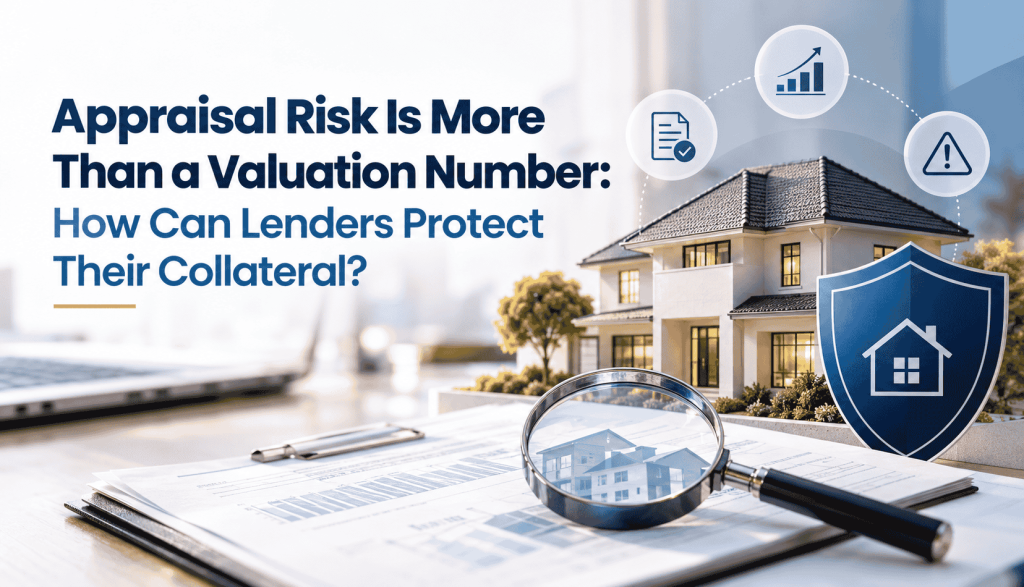
An appraisal is more than a property value estimate. It is an important part of the mortgage lending process that helps lenders understand the property they are financing, make informed lending decisions, and manage potential financial risks.
But what happens when an appraisal contains inaccurate information, overlooks important property characteristics, or relies on sales that do not truly reflect the local market?
Even a small valuation issue can create bigger problems. A lender may need to request corrections, delay a loan closing, reconsider the loan amount, or spend additional time reviewing the property’s value. In some cases, an overlooked valuation concern may create risks that continue long after the loan has closed.
This is where appraisal risk management becomes essential.
For mortgage lenders, appraisal risk management means having a consistent process to identify, evaluate, and reduce potential problems throughout the property valuation process. It involves selecting qualified appraisers, maintaining compliance, reviewing appraisal reports carefully, and addressing concerns before they affect lending decisions.
So, how can lenders build a stronger appraisal risk management process without creating unnecessary delays?
Let’s explore the key risks, practical solutions, and the role an appraisal management company (AMC) can play in helping lenders manage valuation quality.
What Is Appraisal Risk Management?
Appraisal risk management is the process of identifying and controlling risks associated with property valuations used in mortgage lending.
The objective is simple: help lenders obtain reliable, independent, and well-supported property valuations so they can make informed credit decisions.
An appraisal risk management process typically covers:
- Selecting qualified and geographically competent appraisers.
- Ensuring appraisal independence and regulatory compliance.
- Evaluating property information and comparable sales.
- Identifying inconsistencies in appraisal reports.
- Managing appraisal revisions and quality concerns.
- Maintaining clear communication between lenders, AMCs, and appraisers.
- Monitoring appraisal performance and recurring quality issues.
For example, imagine a lender receives an appraisal for a property valued at $450,000. The report appears complete, but the comparable sales are located several miles away in a different neighborhood with significantly different market conditions.
If the lender accepts the report without reviewing the comparables, the valuation may not accurately reflect the property’s market position.
A proper appraisal risk management process helps identify this concern, request a supported explanation when necessary, and evaluate whether the report provides a credible basis for the value conclusion.
The goal is not to force an appraisal to reach a particular value. It is to make sure the valuation is credible, independent, and adequately supported.
Why Is Appraisal Risk Management Important for Mortgage Lenders?
Property valuation directly influences several important lending decisions, including loan-to-value ratios, collateral assessments, and the overall risk associated with a mortgage.
When valuation problems go unnoticed, lenders may face financial, operational, and compliance related consequences.
1. Protecting Against Overvaluation
Overvaluation is one of the most significant concerns in mortgage appraisal risk management.
If a property is valued higher than its market supported value, the lender may approve a loan based on an inaccurate understanding of the collateral.
Consider this example:
Example: How an inflated appraisal affects LTV
| Appraised property value | $500,000 |
| Loan amount at 80% LTV | $400,000 |
| Market supported value in this example | $450,000 |
| LTV based on $450,000 value | 88.9% |
Illustrative example only. Actual lending decisions depend on the applicable underwriting and valuation requirements.
That difference matters.
If the borrower defaults and the lender needs to recover its investment through the collateral, an inflated appraisal may leave the lender with less protection than expected.
Appraisal risk management helps lenders evaluate whether the reported value is supported by appropriate market evidence rather than simply accepting the final number.
2. Reducing Loan Processing Delays
Appraisal quality issues can interrupt the mortgage process.
Missing information, inconsistent property details, unsupported adjustments, or incomplete documentation may require additional communication and revisions.
These problems can create a chain reaction:
- The lender identifies an issue in the appraisal.
- The appraisal is sent back for clarification or correction.
- The appraiser reviews the request and responds.
- The lender reviews the revised report.
- The loan closing timeline may need to be adjusted.
When lenders have clear quality control procedures and responsive appraisal partners, many issues can be identified earlier.
This is particularly important for lenders managing high appraisal volumes, multiple markets, and tight closing timelines.
3. Supporting Regulatory and Investor Requirements
Mortgage lenders must consider appraisal independence, applicable appraisal standards, and the requirements of their lending programs and investors.
Depending on the loan and transaction, relevant requirements may include the Appraiser Independence Requirements (AIR), the Uniform Standards of Professional Appraisal Practice (USPAP), and applicable agency or investor guidelines.
An effective appraisal risk management process helps lenders maintain documentation, establish appropriate review procedures, and address valuation concerns without improperly influencing an appraiser’s independent conclusions.
Compliance should not be treated as a final checklist completed after the appraisal arrives. It should be part of the entire valuation workflow.
What Are the Most Common Appraisal Risks?
Understanding the different types of appraisal risk makes it easier for lenders to identify where their processes need improvement.
Valuation Risk
Valuation risk occurs when the appraised value does not adequately reflect the property’s market-supported value.
Potential causes include:
- Inappropriate comparable sales.
- Unsupported adjustments.
- Incorrect property information.
- Limited understanding of local market conditions.
- Inadequate explanation of unusual valuation conclusions.
For example, a property in a rural market may have fewer recent comparable sales than a property in a large metropolitan area. The appraiser may need to use older sales or properties located farther away.
That does not automatically make the appraisal unacceptable. The important question is whether the appraiser explains why those sales are appropriate and how differences were considered.
Compliance Risk
Compliance risk arises when the appraisal process does not meet applicable legal, regulatory, professional, or investor requirements.
Examples include improper attempts to influence an appraiser’s value conclusion, incomplete documentation, or failures to follow the applicable appraisal review process.
Lenders should establish clear procedures for requesting corrections and additional information while protecting appraiser independence.
Appraiser Qualification Risk
An appraiser may hold the necessary credentials but still lack sufficient experience with a particular property type or market.
For example, valuing a complex rural property, a unique commercial-style residential property, or a property with unusual characteristics may require specialized local knowledge.
Lenders should consider more than availability when assigning appraisal orders. Qualifications, geographic competence, relevant experience, and demonstrated report quality all matter.
Property Data Risk
Incorrect property details can affect the credibility of the appraisal.
Examples include inaccurate square footage, an incorrect bedroom count, overlooked additions, or discrepancies between public records and the actual property.
These differences should be evaluated carefully. Public records can be incomplete or outdated, and not every discrepancy indicates a valuation problem.
The lender needs a process for determining which information requires clarification and whether the difference materially affects the valuation.
Operational Risk
Operational risk includes problems with appraisal ordering, communication, scheduling, report delivery, and quality control.
A lender may have qualified appraisers available but still experience delays because order assignments are unclear, status updates are inconsistent, or revision requests are not managed efficiently.
Strong operational controls help keep the appraisal process moving while preserving the quality of the final report.
7 Practical Ways to Improve Appraisal Risk Management
A strong appraisal risk management program does not depend on one final review. It combines preventive controls, ongoing monitoring, and appropriate follow-up.
Here are seven practical steps lenders can take.
1. Choose Appraisers Based on Experience and Market Knowledge
The first step is assigning the right appraiser to the right property.
Lenders and their appraisal management partners should evaluate appraiser credentials, relevant experience, geographic familiarity, and historical quality.
A qualified appraiser with strong knowledge of the property’s local market may be better positioned to identify meaningful comparable sales and explain market-specific conditions.
However, appraiser selection must remain independent and compliant with applicable requirements. Lenders should not choose appraisers based on whether they are likely to produce a desired value.
2. Establish Clear Appraisal Ordering Procedures
Appraisal risk can begin before an appraiser visits the property.
Incomplete order information, incorrect property details, missing contact information, or unclear assignment requirements can create avoidable confusion.
Lenders should establish a consistent process for submitting complete appraisal orders, including relevant property information and the applicable assignment requirements.
A clear order at the beginning reduces the likelihood of preventable questions later.
3. Use a Structured Quality Control Review
A quality control review should evaluate whether the appraisal report is complete, internally consistent, and adequately supported.
Depending on the assignment and applicable requirements, reviewers may examine:
- Property characteristics and reported condition.
- Comparable sale selection.
- Adjustments and supporting explanations.
- Market conditions and trends.
- Reconciliation of the final value.
- Required documentation and reporting elements.
The review should focus on credible evidence and compliance, not whether the appraised value matches the lender’s expectations.
For instance, if a reviewer notices that a comparable sale appears to be in a substantially different market area, the appropriate next step is to request a clear explanation or additional support when warranted.
A well-structured review helps identify meaningful concerns without automatically sending every report back for revision.
4. Create a Consistent Revision Management Process
Revision requests are a normal part of appraisal quality control, but poorly managed revisions can create unnecessary delays.
Lenders should make revision requests:
- Specific and easy to understand.
- Based on an identifiable reporting or documentation concern.
- Limited to information needed to evaluate the appraisal.
- Consistent with appraisal independence requirements.
Instead of asking an appraiser to simply “increase the value” or “match the contract price,” a lender should identify the actual concern.
For example, if a comparable sale appears to have a different property condition, the request could ask the appraiser to clarify the condition differences and explain how they were considered in the analysis.
The distinction is important: lenders can request clarification and support, but they should not pressure appraisers to reach a predetermined value.
5. Monitor Appraisal Performance Over Time
Appraisal risk management becomes more effective when lenders look beyond individual reports.
Regular monitoring can help identify patterns such as:
- Repeated missing documentation.
- Frequent avoidable revisions.
- Consistent delivery delays.
- Recurring property data discrepancies.
- Quality concerns involving specific property types or markets.
These findings can guide process improvements, appraiser communication, and future assignment decisions.
Performance metrics should be interpreted carefully. A high revision rate may reflect complicated assignments or inconsistent lender requests rather than poor appraiser performance alone.
The purpose of monitoring is to identify and understand risks, not to create pressure for faster reports at the expense of quality.
6. Maintain Clear Communication Between All Parties
The appraisal process involves several participants, including lenders, appraisers, appraisal management companies, borrowers, and sometimes real estate agents.
When communication is unclear, small questions can become significant delays.
A better approach includes:
- Clear order instructions.
- Defined points of contact.
- Timely status updates.
- Documented revision requests.
- Consistent communication about scheduling and access.
An organized communication process helps everyone understand what is needed and who is responsible for the next step.
7. Use Technology to Improve Visibility
Technology can support appraisal risk management by making it easier to track orders, identify outstanding requirements, and monitor appraisal status.
For example, a centralized appraisal management platform can help lenders see whether an order has been assigned, scheduled, completed, or submitted for review.
This visibility helps operations teams identify potential delays before they affect the closing timeline.
However, technology should support professional judgment rather than replace it. Automated checks may identify missing fields or inconsistencies, but a qualified reviewer may still need to evaluate the context behind the information.
How Does an Appraisal Management Company Help With Appraisal Risk Management?
An appraisal management company can support lenders by coordinating the appraisal process, connecting assignments with qualified appraisers, managing communication, and providing quality control services.
For lenders handling multiple markets or substantial appraisal volumes, this support can help create a more consistent valuation workflow.
Appraiser selection: Connecting appraisal assignments with qualified professionals who have relevant market knowledge and experience.
Order management: Coordinating appraisal requests, scheduling, status updates, and report delivery.
Quality control: Reviewing reports for completeness, consistency, and appropriate supporting information before delivery.
Revision coordination: Managing clear and documented requests for clarification or corrections.
Workflow visibility: Providing access to order status and helping lenders identify potential bottlenecks.
Signature Valuation Management provides appraisal solutions for lenders and brokers, with an emphasis on quality, compliance, and market informed valuations. Its services include a network of qualified appraisers, quality control review, and visibility into appraisal order status.
For lenders, the value of this type of support is not simply having someone manage an appraisal order. It is having a process that helps identify potential issues, maintain communication, and support reliable valuation decisions.
The lender remains responsible for its own credit decisions, risk policies, and applicable compliance obligations. An AMC supports the valuation process but does not eliminate the lender’s need for appropriate oversight.
Appraisal Risk Management Checklist for Mortgage Lenders
Before accepting an appraisal for use in a lending decision, lenders can use the following questions to guide their review.
| Review area | Questions to consider |
|---|---|
| Appraiser qualifications | Does the appraiser have the required credentials and relevant market experience? |
| Property information | Are the property characteristics accurate and adequately documented? |
| Comparable sales | Are the comparable properties appropriate for the subject property and market? |
| Adjustments | Are material adjustments reasonably explained and supported? |
| Final value | Is the final value conclusion consistent with the analysis presented? |
| Compliance | Were applicable appraisal independence and reporting requirements followed? |
| Quality control | Have identified concerns been addressed appropriately? |
| Documentation | Is the appraisal and related communication retained according to applicable policies? |
| Operational status | Are outstanding questions or revisions being tracked to completion? |
This checklist is a practical starting point, not a substitute for applicable appraisal standards, investor requirements, or a lender’s formal review procedures.
Build a More Reliable Appraisal Process With the Right Support
Appraisal risk management is not about finding a problem in every appraisal. It is about building a reliable process that helps lenders recognize meaningful valuation concerns, address them appropriately, and make informed decisions.
From selecting qualified appraisers to reviewing comparable sales and managing revisions, every step contributes to the quality of the final valuation.
For lenders, the strongest approach combines clear internal procedures, experienced appraisal professionals, consistent quality control, and effective communication.
Signature Valuation Management supports lenders and brokers with appraisal management services designed around quality, compliance, and visibility throughout the appraisal process.
Frequently Asked Questions: Appraisal Risk Management
1. What is appraisal risk management in mortgage lending?
Appraisal risk management is the process of identifying and reducing risks associated with property valuations used in mortgage lending. It includes selecting qualified appraisers, reviewing appraisal reports, checking comparable sales, and ensuring compliance with applicable requirements. The goal is to help lenders make informed decisions based on credible property valuations.
2. Why is appraisal risk management important for mortgage lenders?
Appraisal risk management helps lenders protect their collateral interests, identify potential overvaluation, and avoid lending decisions based on inaccurate property values. It also helps reduce appraisal delays, manage quality concerns, and maintain a more consistent loan processing workflow.
3. What are the most common appraisal risks lenders should watch for?
Common appraisal risks include overvaluation, inaccurate property information, inappropriate comparable sales, unsupported valuation adjustments, incomplete documentation, and appraisal independence concerns. Operational issues, such as delayed reports and poorly managed revision requests, can also affect loan closing timelines and processing costs.
4. How can mortgage lenders reduce appraisal risk?
Mortgage lenders can reduce appraisal risk by assigning qualified appraisers with relevant market knowledge, providing complete appraisal orders, conducting consistent quality control reviews, and addressing report discrepancies promptly. Clear communication with appraisers and appraisal management companies also helps identify potential issues before they affect lending decisions.
5. How does an appraisal management company help with appraisal risk management?
An appraisal management company (AMC) can support appraisal risk management by coordinating assignments with qualified appraisers, managing appraisal orders and communication, tracking report status, and conducting quality control reviews. These services help lenders identify potential valuation concerns, improve workflow visibility, and maintain more consistent appraisal processes.
6. Can appraisal risk management help reduce loan processing delays?
Yes. A structured appraisal risk management process can help identify missing information, property data discrepancies, and report inconsistencies earlier in the mortgage process. Clear revision procedures, timely communication, and organized appraisal order management can reduce avoidable back-and-forth and help keep loan processing on track.
7. What should lenders check during an appraisal risk review?
Lenders should check whether property details are accurate, comparable sales are appropriate, valuation adjustments are adequately supported, and the final value conclusion is consistent with the appraisal analysis. They should also verify that applicable reporting and compliance requirements are met and that identified concerns have been addressed appropriately.